Curious about who I am? Posts about health and natural birth Resources and posts regarding vaccines and informed consent Posts about Parenting and Relationships Spirituality and Life Lessons Email me Home
Showing posts with label Parenting. Show all posts

Common Questions on Vaccine Injury

Despite precautions and testing, some children and adults suffer lifelong medical problems, or have died, as a result of being vaccinated.


In 1986, the National Vaccine Injury Compensation Program (VICP) was developed to safeguard vaccine supply (manufacturers) and to compensate those who have developed injuries from vaccination.[*]


So far this year (2013), the amount paid out by the Vaccine Injury Compensation Trust Fund is 224 million dollars.[*]


Because vaccine injuries, disabilities and deaths are real, it is critically important that you take the time needed to gather information and make a confident, educated decision.


Below are some common questions regarding vaccine injury and compensation:


What type of injuries are compensated by the VICP?


To qualify for a claim, the injury must result in at least one out of the four following damages:


-Last for more than six months (post vaccination)

-Resulted in a hospital stay

-Resulted surgery

-Resulted in death


I would suggest checking out this Vaccine Injury Table which lists conditions that are presumed to be caused by vaccines. It also lists time cut-offs which will help determine if the injury is causal.


These conditions are otherwise known as ‘table injuries’ which are known, compensated injuries due to adverse reactions from vaccination.


It is important to note that compensation has been made for many vaccine-related injuries that are not listed on the injury table.


If your injury is not on the Table or if it did not occur within the time period listed, then you are simply required to prove that the vaccine caused the condition. Such proof is based on medical records or opinion, which may include expert witness testimony.


Who files the claim?


If you believe you have a claim, you should file a report (VAERS) and contact a lawyer.  The National Vaccine Information Center maintains a list of attorneys who deal specifically with VICP claims.  You can find their list of attorneys here on the NVIC website.


You do not need to be a doctor or a citizen of the US to file a claim.


Are all vaccines covered by the VICP?


Although most vaccines recommended for children are covered, not all are eligible for compensation.


How long do I have to file a claim?


Depending on the adverse event that took place, the amount of time you have to file a claim changes.


For example, if the vaccine injury results in death – you have 2 years to file a claim.


If you (or your child) is injured in any other way other than death, you have 3 years from the onset of the first symptom.


Click here to read more about the deadlines regarding vaccine-injury claims.


Is autism considered a vaccine-related adverse event?


No and yes.


The official statement provided by Health and Human Services asserts that:


“HHS has never concluded in any case that autism was caused by vaccination”


That’s all fine-and -dandy, however, numerous cases that have been rewarded on the ground of vaccine-induced encephalopathy (brain disease) has associated autism spectrum disorder.


Two compensated examples from this year alone:


10 yr old Ryan Mojabi  was awarded compensation from neuroimmunologically mediated dysfunctions in the form of asthma and ASD[*]


15 month old Emily Moller was awarded compensation on the ground of her injury listed as “encephalopathy characterized by speech delay and probable global developmental delay” (seizure disorder and PDD-NOS, a form of ASD). [*] 
 

More damning to the case against the HHS state is an article published in 2011 from the Pace Environment Law Review (PELR), where it was found that at least 83 cases of vaccine injuries compensated by the Department of Health and Human Services (HHS) involve acknowledged brain damage that included autism.


In 47% of the cases reviewed (39 out of the 83), there is confirmation of autism or autism spectrum disorder beyond parental report.[*]


The published review illustrates that the VICP has been compensating cases of vaccine-induced brain damage associated with autism for more than twenty years. 


How much is awarded and how long will it take?


It takes on average 2-3 years to work through the process.[*]


There is no limitation on the amount of an award in a vaccine-related injury; however, the law does contain certain restrictions. For example, the compensation for vaccine-related death is limited to $250,000.[*]


Awards range from $80,000 to $5.9 million – with the average amount awarded to individuals with an injury at approximately $800,000.00.[*]


Where does the money come from?

Since 1988, when the National Childhood Vaccine injury Act was enacted, a “no-fault” system was created to compensate the individuals that have been harmed by the administration of a vaccine.


The manufacturer does not at any time pay for any injuries caused by their vaccines unless the injured person rejects their awarded claim (money) by the court and decides to sue a manufacturer (I am unaware of any documented case of this happening since 1988).[*]


All money awarded is paid from the Vaccine Injury Compensation Trust Fund which is funded from a tax of $0.75 on every dose of vaccine that is purchased (via
your insurance premiums or direct purchase of vaccines).[*]


The Department of Treasury collects the taxes and manages the Fund’s investments.  Below are some documents you can review to learn more about how the money has been allocated and how much has been spent.


***


Vaccines carry with them risk of sickness, injury and death. To bring attention to that fact and the growing crisis of the injured, October is designated Vaccine Injury Awareness Month.


How can we help those who have been injured?


One of the ways we can assist these families is by spreading the word that vaccine injuries are real and they are more common than we are led to believe.


If you are on facebook or twitter, please use the image below as your profile image for the month of October. Please spread the word amongst your own networks.


Bring the issue of vaccine injuries out into the public’s eye!


More information can be found at the VICP website which is maintained by the U.S. Department of Health and Human Services and the Health Resources and Services Administration.

 

Common Reactions from a Crunchy Mama - GIFs style

Here are some common reactions from someone living and parenting in a more natural approach… and although these pictures below are used in a comical manner, there is an underlying genuine meaning to this post. 


I use the word ‘reaction’ purposefully in the title because reacting is something we should do our best at preventing - at least I know I do, for my own sanity.

I get it - I know that it is not only challenging to be a parent, but place that in combination with living and embracing lifestyle choices that are not yet common in mainstream parenting – you can find yourself being confronted on a daily basis.

If we are able to interrupt our REACTION and instead CHOOSE how we RESPOND, then the situations that tend to harm others (physically, mentally and emotionally) can be reduced.

When someone says and does something that we might not necessarily choose for ourselves/children, be confident in your own choice – so much so, that you do not feel threatened by the choices made by others.

As you go through this day, make a deal with yourself to observe how you impact others!

 ****


‘I turned out just fine’ from ________ (insert any nonsensical societal/medical tradition)


When I see a complete stranger wearing an Ergo carrier.


When someone tells me co-sleeping will result in a clingy kid that will never leave my bed 


When I find another crunchy mama that lives in my neighborhood 


My reaction to the ever so common argument: “Formula is just as good as breast milk.”


People who say that organic, whole food isn’t any better then conventional pesticide, GMO crap.


The feeling I get as soon as I comment on a circumcision debate in online forum 


When my daughter picks up anything at the store, looks at the ingredients and puts it back on the shelf


When I hear someone is planning on trying for an au natural birth


Every time I go to a natural food/health store


that one time, I watch that one documentary that made me cry like a baby. (who I am kidding, every documentary I cry like a baby)


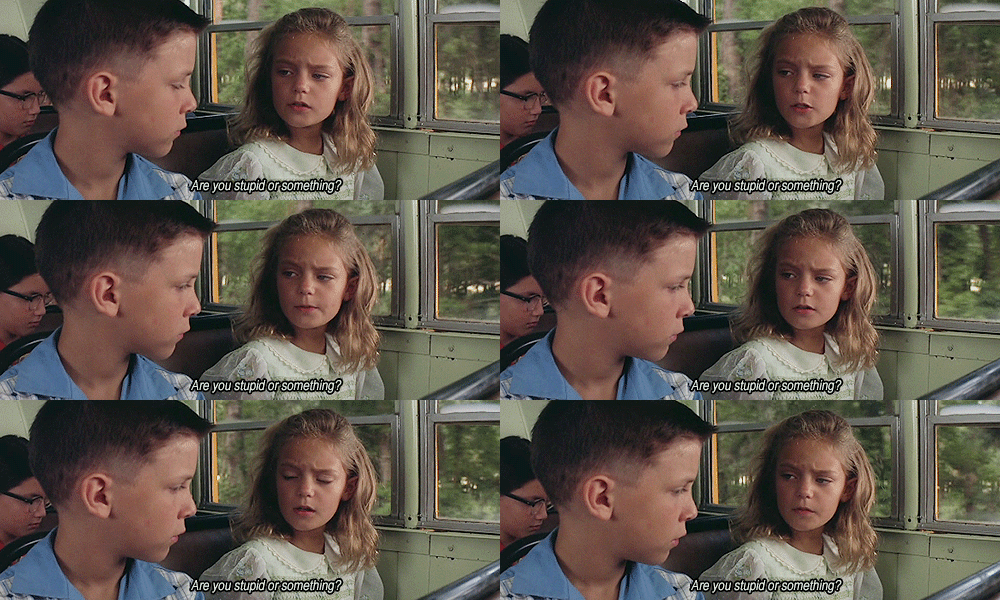
Being told your kids need to be vaccinated to go to school


And then finding a doctor that supports your choice to file a vaccine exemption 


Ways My Child Is Different Than Your Dog


There are many similarities between the relationship and bond formed between pet owners and their pets – and those raising (human) children.

A pet owner will make many sacrifices and investments to provide a loving and suitable home for their family pet. In return, the bond of unconditional love, comfort and enjoyment a pet provides is immeasurable. The love shared between them is lasting and profound.

I have many people in my life experiencing this intense love with their animals, those of which that have not yet had children, are unable to have children or simply opt-out of having children all together.

I honor and embrace this love – no matter what the species.

This bond between owner and animal is so strong, you may eventually come across the comparison that a person’s dog or cat is just like having a child.

In fact, you may come across people who insist raising their dog is just like raising a child.

***

There is no doubt that animals generate the type of Love that is universal and that can be deeply felt by everyone regardless of race, gender, ethnicity, or handicap.

With that being said, although similarities do exist, raising a dog/cat is not remotely the same as raising a child.


Parental Development Caused and Reciprocated By Kids (Not Dogs or Cats)

Growing and changing over the course of their child’s lives, parents experience complexity and diversity in relation to their growing child. As a child grows and develops, so does the parent – many of which transcends the owner/pet connection.

Some of the points below reference ‘The Six Stages of Parenthood’ by researcher Ellen Galinsky. [*][*]


Imagery of Future

Even before you hold a child in your arms, the journey for the parent begins.

A parent begins to create images and ideas in their mind of what lies ahead for both their child and themselves.

As time goes on and the parent (and child) develops, these images are modified and transformed – some may encompass siblings and even grandchildren.

When my daughter was an infant, I would imagine what her voice would sound like when she got old enough to talk and say my name, “Momma”. Over time, I started to generate ideas of who her best friend would be or what high school she would want to go to.

Creating these images of a child stimulate the parent to investigate their own values and they eventually must learn to respect their partner’s values and dreams for the child they share.

Imagery does not make the owner/pet bond less meaningful – it simply distinguishes it from raising a child.


Attachment, Autonomy and Priorities

There is no doubt that a bond between human owner and animal can be powerful and intense. I have experienced it myself.

However, another key distinction arises with children: Like a dog or a cat, parents create the bond of attachment through holding, touching and caring for their child – however, with a child a distinct variety of issues and questions arise regarding attachment, autonomy (both for the parent and the child) and priorities.

Parents are faced with meeting the needs of their child and the need to balance responsibilities to their spouse, friends and career. Child care and work schedules must be flexible as well.

Consider relinquishing the desire to relocate closer to family because you value raising your children in an area with a better school system  - - or picking up a second job (giving up time spent with your spouse and family) to pay for private school or expensive, enrichment classes (ex. dance, musical instrument).

Attachment arises between both owner/animal and parent/child – however, the complexities and intricacies of the issues raised over time with children are dissimilar then raising an animal.


Authority and Freedom

In some cases, parents begin to generate ideas of what type of disciplinarian they might be before a child is even born.

“I swear I’ll never be like my mother, I swear I’ll never be like my mother, I swear I’ll never be like my mother.”

No matter what underlying issues a parent holds prior to kids, parents soon begin to understand and respect that their child is not an extension of themselves, rather they must guide, nurture and discipline their child’s unique persona.

Eventually, the unique dilemma of allowing enough freedom for a child to grow and develop arises – at the same time, communicating and establish limits (which also allows for further personal development, both parental and for the child).

This particular point is compelling when distinguishing between the type of relationship you have between a child and an animal.

True, you must train and discipline an animal, however, as a parent, one of the most difficult aspects is letting a child experience disappointments and failures – a parent understands that they must endure their pain of letting a child go because it is for their benefit in the end.


Parental Values and Outside Influences

Another intricate layer that exists when raising a child: As the parent recognizes that he/she is not the only core influence in their child’s life, they must decide and learn how they will translate their beliefs and values to their child (especially once their child starts learning new reasoning skills).

As a child grows, a parent realizes that “my child is not me”. This is essential in distinguishing between an animal and a child because a parent must learn to illustrate their beliefs while at the same time respecting a child’s birthright in choosing their own beliefs.

Parents must learn how to answer a child’s questions (ex. “what does ‘abortion’ mean?”, “why do people choose to be vegetarian?”, “what happens after we die?”) while promoting specific values and knowledge.

As children grow, a parent may find themselves playing damage-control as outside sources (teachers, friends, media) begin to influence their children in more profound ways.

Ultimately, parents are motivated to continually evaluate their beliefs and values – as the child grows, they must learn to differentiate their own personal perspective and allow their child to develop their own.

This particular facet is missing in the owner/animal model.


Inter-dependence and Independence  

Preferences in clothing, behavior toward the opposite sex, language, hairstyle, physical growth – the list could literally go on forever. Children are forever growing, changing, and testing independence while, at the same time, demanding familiarity and intimacy.

To provide the most effective guidance and communication in times of growth and change, parents must have a superior understanding of themselves.

The relationship with a child is continually re-defined, swinging back and forth between closeness and distance which may leave a parent’s head spinning like a top.

Animals are quite different in this respect.


Departure

Another key discernment among animals and children: the child eventually grows up and leaves home.

Eventually, after all of the investment (monetary, emotionally, spiritually) the child leaves the parent.  

Parents may worry and wonder all sorts concerns: how far away the child might go or how often they will be together. New habits and traditions may be created merely in search for new ways to stay close as a family.

The complexity deepens as a parent must learn to accept the separateness, eventually redefining their own identity without their children present in their everyday life.


Conclusion

Animals provide immeasurable comfort, love and enjoyment to their owners.

To those families that do not have children, animals are a pleasant joy that offers profound enrichment for many years.

However, as mentioned above, children largely differ from pets.

Ultimately, parenting a child is a process – one that promotes and supports the physical, emotional, social and intellectual development of a child and the parent.


How to be an Asshole Attachment Parent

Being labeled as an asshole often plagues those who find themselves in the Natural Parenting niche.

In the natural/attachment/progressive/whatever-term-you-fancy parenting community, our passion is often times our own Achilles Heel in respects to overstepping boundaries and putting our foot in our mouths, albeit this problem festers deep within the mainstream just as much (have you seen some of those facebook pages, yiiiiikes).

No matter who started what or who the bigger ass is, I bring this issue up because I sincerely believe that we (the natural community) can begin to alleviate this problem between mainstream and alternative because we we are the ones advocating the value in attachment, respect and unity.

I think often times we don’t consider what other parents are experiencing because we are too busy (or simply refuse) to stop, look outside our own little bubble and, most importantly, value someone else’s choice.

I get it, breastfeeding – hey, you nailed it (me too), and if you had difficulties you pulled up your big-girl britches and dealt with it…and don’t even begin to mention the ethical concerns surrounding circumcision, the research reinforcing the detrimental effects of spanking and the  blah blah blah ….

I agree these issues are important and my heart is engulfed in the same advocacy, my friend. But there should be some reverence for the life another human being is actively choosing to live.

This doesn’t mean we will understand it nor does it mean we must validate it or approve it. Another person’s life is not up for our approval in the first place.

The bottom line is we must be more diligent in respecting the choices others make.


Generation X, Attachment Parenting and Over Compensation  

I’ll be the first to admit my guilt of totally saying things before I think (who hasn’t?).

            Hi, my name is Amanda and I’ve totally been an ass.

At times, maybe I’m quick to be offended…other times I’m quick to offend.

With everyone fixated with social media and publishing their opinion on pretty much everything (hey, myself included), we are flooded with perspectives that are different for our own every minute, every day.

From a sociological perspective, parents my age belong to a cohort that was molded by Nintendo, daycare, star wars and divorce. 

That’s not necessarily a bad thing (Star Wars is pretty damn awesome), however according one study, our generation “went through its all-important formative years as one of the least parented, least nurtured generations in U.S. history”.[*][*]  

This piece of knowledge married with a bit of Psych 101: What is unhealed from your own childhood will reveal itself when you have little tots of your own.  

And viola – attachment parenting is birthed (naturally, of course). 

Don’t get me wrong – again, I love the tenants of attachment parenting, the foundation of progressive parenting, and the community of natural parenting. I live by them, just like you (and write about them too).

I suspect that some (okay, many?) natural parents today may be fueled by a strong desire to do a better job at parenting than their parents did (I know this rings true to me). Again this isn’t a bad thing either.

However, where our natural community severely veers off tract is in two aspects (maybe more, but these are the two that I found myself affected by):

(1) given the crack-pot job some of our parents did (and the majority of other parents embracing mainstream choices in parenting), we are left with a real lack of constructive role models to go about showing us how to be a sufficient parent….leading often times to over-compensation…and hence, unwittingly acting like an ass.

(2) We see other children crying it out, formula fed by choice, rode in strollers, fed crap food – and subconsciously maybe we feel like if we help them, then we are helping our own childhood-self in some way. Because as children we cried it out, was fed junk food and left feeling a real lack of affection – and we didn’t “turn out just fine”.

It’s not all about being a product of divorced, overworked parents and latchkey programs.  Maybe every generation simply has unresolved issues with itself. 

I implore you, fellow AP parents: Stay committed to your decisions, but stay flexible in your approach.


4 Easy Steps on how to become an Asshole Parent:
(with counter-steps on how NOT to become one)

Recognize and become familiar with your own tendencies to act callously toward others (no one is perfect and we can all improve treating others better). Hopefully, this list this will give us a great advantage to recognize (in yourself and in others) douche-bag  propensities - and with any luck, stop giving other natural parents a bad name.   


Step 1
Become an expert on something, anything – you pick.

Counter-step: Focus on learning and as soon as you think you know something entirely, your jerk-alert should go off.

Bonus Tip : You know, the more alternative parents get a real bad rap for this (aka santimommy), but if you think this is the only group of parents acting like a bunch of assholes, then you are poorly mistaken. No one is immune to falling prey to this step.

Pride yourself as a seeker not a know-it-all.


Step 2
Speak in absolutes.

“I will never ____.”
“My children always ____.”
“She should never _____.”

Counter-step: Be. Meticulous. About. The. Words. That. Come. Out. Of. Your. Mouth.

Bonus Tip: No matter how thoughtful you are with your words, at some point in time you are likely to offend someone – fact is, there are people out there scouring the ends of the Earth to be offended. The best you can do is to place effort into saying things with kindness and coming from a place of love.

Good luck!


Step 3
At every chance available to you, declare other people’s incompetence.

Counter-step: I know, this step is hard especially if you are learning about your own tendencies of overcompensation. No one is perfect and not everyone wants your two-cents on the subject. You may get burned a few times to eventually learn which of your friends appreciate your unique perspectives. Appreciate other’s point of view too and find value in it.

Bonus Tip: If a friend posts a picture of her child in the car, please refrain from commenting that the child in not properly restrained followed by links to carseat safety and video on youtube of the benefits of extended rearfacing. While I agree there is value in information – consider talking to her off record or send a private message.  


Step 4
You have a small list of close friends and a long list of enemies which you are equally proud of.

Counter-step: True, you can’t get along with everyone and its not your business to make everyone like you – but better yet, give your attention to that which you support and love, not that haters.

Bonus Tip: We’re all in this together, my friends. You can’t get rid of hate with hate, only love can do that.


Parents in the Natural community have another platform to push now – the one that unites us: mainstream and alternative.

United we can accomplish a better future for our children, better then we can ever imagine.

Stop.
Think.
Smile.
Encourage.
Or move Along.


Image Map